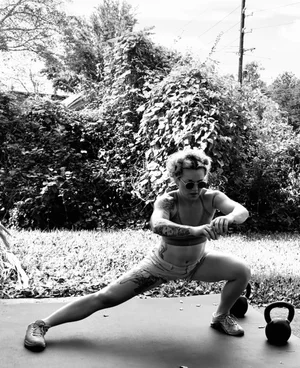
BAF January 2026 Newsletter: New year, new training block
Happy New Year, everyone!
Did you set a New Year’s intention?
And more importantly — how’s it going so far?
I hope you’ve recovered from the holidays and are enjoying a brief return to normalcy before jumping head first into Carnival season. Believe it or not, you can still keep on track despite these interruptions. In fact, we should welcome them as new opportunities to stay adaptable! More about living in harmony with Mardi Gras as a fit conscious person in the February Newsletter.
New Schedule?
I am floating the idea of moving into our Winter / Early Spring schedule:
Fridays @ 3:30 PM
Saturdays & Sundays @ 12:30 PM
We would likely stick with this schedule through late March or April, then re-evaluate as we approach summer.
Let me know if you like this new proposed schedule or want to stick with the current 11 AM Fri-Sun!
____________________________________________________________
what is a training block?
A training block is a period within the year that dedicates the movement practice to a particular goal. The goal can be as unique and specific as the person participating, but the most common training blocks are:
• Endurance
• Hypertrophy
• Strength
• Power
• Skill
And there are endless iterations of this.
why have training blocks?
To stay focused on a few key things instead of trying to do everything all at once. The idea is, as we get closer to mastery of a few skills or types of training, we can apply that to get better at OTHER skills/training.
how our training blocks are organized
In a performance model, training blocks are organized for athletes to “peak” at a certain time of year, like competitions or games. As general population athletes, we don’t necessarily have a competition season to structure our training around. So I structure the training blocks around major holidays (“peak” or “test periods” before everyone goes on holiday) and the seasons of the year.
Because our classes are held outdoors, Cooler months are ideal for conditioning — generating body heat actually works in our favor. Warmer months, on the other hand, are better suited for slower-paced strength and hypertrophy work, where heart rate stays lower and heat has less impact on performance.
Think of your body like an engine. Engines perform better in cooler temperatures because everything stays… well, cooler. High-performance engines also require an efficient cooling system — and so do you.
Another benefit of cooler weather? You don’t sweat as much for the same level of effort. To take advantage of these (sometimes) drier conditions, the next couple of months will focus on getting great cardiovascular endurance and……
Mastering the Kettlebell.
Kettlebells can get kind of slippery in the summer time with sweaty hands, so this is the ideal time to work through the basics without that distracting you.
baf 2026 training block 1:
fitness and finesse with kettlebells.
Many gyms use kettlebells, but few dedicate enough time to proper technique for participants to fully benefit from — and appreciate — their versatility. As a result, people often dislike kettlebells, find them awkward, or worse, get injured.
Here’s the good news: a kettlebell is just a hunk of metal. It literally cannot do anything wrong. The pain, frustration, weird mechanics you experience when working with it… that’s you against you.
If you’re interested in rehabbing your relationship with the kettlebell, the next few months will be a deep dive into everything this tool has to offer. We’ll focus on developing:
fine motor skill,
full-body coordination,
explosive hip drive,
an engine that won’t quit,
and a bulletproof core.
When you master the kettlebell, you master your body.
This block will require patience and a variety of practice styles, including:
Dedicated practice — multiple sets of a single exercise with adequate rest
Segmented practice — breaking movements like swings, cleans, or snatches into parts
Technique drills — foundational patterns that support mastery
Movement cycling — linking different movements together to better understand their similarities and differences
Remember: you are in charge of the kettlebell.
The kettlebell is not in charge of you.
It only does what you tell it to do.
Don’t worry — these brain-intensive movements will be balanced with more familiar work. We are not abandoning our pursuit of solid pull-ups, push-ups, squats, lunges, deadlifts, handstands, grip strength, lateral stability, good mobility… etc
Hope to see you out there— let’s get lady jacked.
— CJ